The Fatal Oversight
When Silence Becomes the Last Act I Bill Vassilopoulos
6/24/20264 min read
The Fatal Oversight
When Silence Becomes the Last Act I Bill Vassilopoulos
In my previous post, The Fatal Masterpiece, I explored the dark, meticulous architecture of the suicidal mind—the way a person can turn their own final act into a carefully curated end-stage. But we must address the other side of that coin.
We often marvel at the Golden Gate Bridge as an architectural marvel, a triumph of human engineering that stands as an iconic piece of global design. Yet, for all its beauty, we must confront the painful tension between that structural legacy and the human cost it has incurred. While the bridge is a masterpiece of steel and art deco design, its history is scarred by the reality that its form was never intended to prioritize the safety of those who walk upon it. Just as we must demand accountability for architectural safety, we must demand accountability for our own social silence.
If The Fatal Masterpiece is about the internal decision to leave, then the story of Duke Davis is about the external failure of a community to intervene. While the individual is busy crafting their departure, the rest of the world is often busy looking away. We are often the missing variable in someone else’s final equation.
We often justify our indifference with the excuse that we don't want to "interfere." Yet, Scripture reminds us that we are our brother's keeper (Genesis 4:9). We are not passive observers; we are participants in the lives of those around us. As Galatians 6:2 instructs, we are called to "Carry each other’s burdens, and in this way you will fulfill the law of Christ."
The morning of June 2019 was bright and warm, but for Duke Davis, the sun offered no comfort. A structural engineer just out of university, Duke was currently crushed under the weight of a truckload of debt and the absolute silence that followed his girlfriend ending their relationship a week before his graduation.
He felt dark and insignificant. He felt the specific, grinding exhaustion of a man who had spent his final hours cleaning his apartment, leaving behind the remnants of fast food and the heavy, lingering presence of a life he no longer wanted to inhabit.
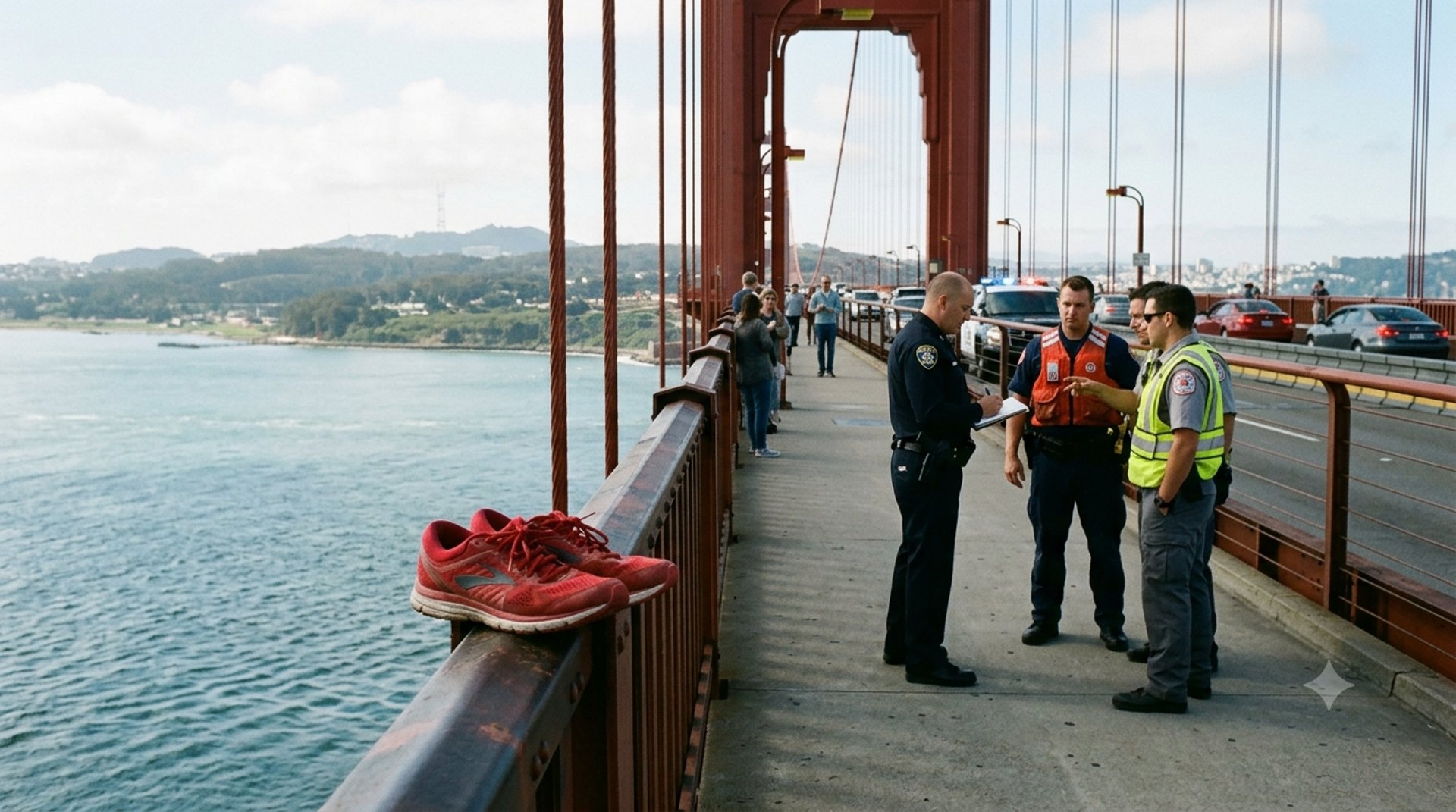
He put on the brand-new red runners he’d bought the night before and began his walk toward the Golden Gate Bridge.
He walked for miles, passing beautiful homes and families bustling toward school. He moved alongside dog walkers and commuters locked in the rush-hour grind. His heart raced; he was sweating, nervous, and dizzy. He was a man walking in plain sight, projecting the visible, chaotic energy of someone in deep distress—yet he remained invisible. The world was too busy, too preoccupied, and too fast to notice the young man who was desperately searching for a single reason to turn back.
When he reached his favorite spot on the bridge, he took off his shoes and placed them on the rail. A car honked—a sharp, aggressive sound—but no one stopped. No one rolled down a window to ask if he was okay. No one looked him in the eye. Alone, scared, and fully convinced of his own irrelevance, he jumped.
It was only when the car doors finally opened that the world cared. The blaring of horns shifted from annoyance to alarm. The police arrived, and with them, the specialized coast guard and diving teams. For those responders, this was not a news story; it was a grueling, somber recovery operation. They carry the weight of these moments long after the tide pulls back—the memory of a body found, the administrative nightmare of notifying next of kin, and the haunting reality that their intervention came moments too late to save a life, but just in time to witness its end.
When the police entered Duke’s apartment later that day, they found the wreckage of a life left behind: the messy room, the isolation, and the letter on his desk. It read: “No one would even notice if I left. I’m going to my favourite spot on the Golden Gate Bridge this morning. And if one person smiles at me or even says hello to me today, I won’t jump.”
This is the tragedy of our modern indifference. We assume crisis intervention is a job for someone else—a clinician, a social worker, a first responder. We think it requires a degree. But Duke’s story proves that the only thing missing that morning was a human connection. We are called to "look not only to your own interests, but also to the interests of others" (Philippians 2:4).
This is why I wrote Eyes Above the Water.
Helping someone in crisis isn't about having the right answers; it’s about having the right eyes. The stories in my book come from the front lines of this global crisis—from the first responders who bear the burden of these calls, and from the families left behind who are still searching for peace. I wrote this to bridge the gap between "noticing" and "acting." It is a guide to the basic, human skills of Real, Raw, and Respectful Talk (3RT).
We are all capable of being a lifeguard. We are all capable of noticing the person who is drowning in plain sight before the sirens have to be called. If you are ready to move from being a spectator to someone who can actually hold space for a life, I invite you to join my 3RT newsletter and read these accounts.
Remember your inherent truth:
You are irreplaceable: "For you created my inmost being; you knit me together in my mother’s womb." (Psalm 139:13)
You are unrepeatable: "Before I formed you in the womb I knew you, before you were born I set you apart." (Jeremiah 1:5)
You are highly valued: "Are not five sparrows sold for two pennies? Yet not one of them is forgotten by God... you are worth more than many sparrows." (Luke 12:6–7)
You are not a burden: "Come to me, all you who are weary and burdened, and I will give you rest." (Matthew 11:28)
A Note to the Reader
If you find this content difficult, understand this: the darkness already exists in our communities. Ignoring it does not make it disappear; it only makes us less prepared to act when we encounter it. My work is not meant to be comfortable—it is meant to be lifesaving. We must stop treating human connection as an optional luxury.
Warmly, your friend,
Bill