
The Fatal Masterpiece
Ethical Critique I Bill Vassilopoulos
6/16/20263 min read
The Fatal Masterpiece:
Ethical Critique I Bill Vassilopoulos
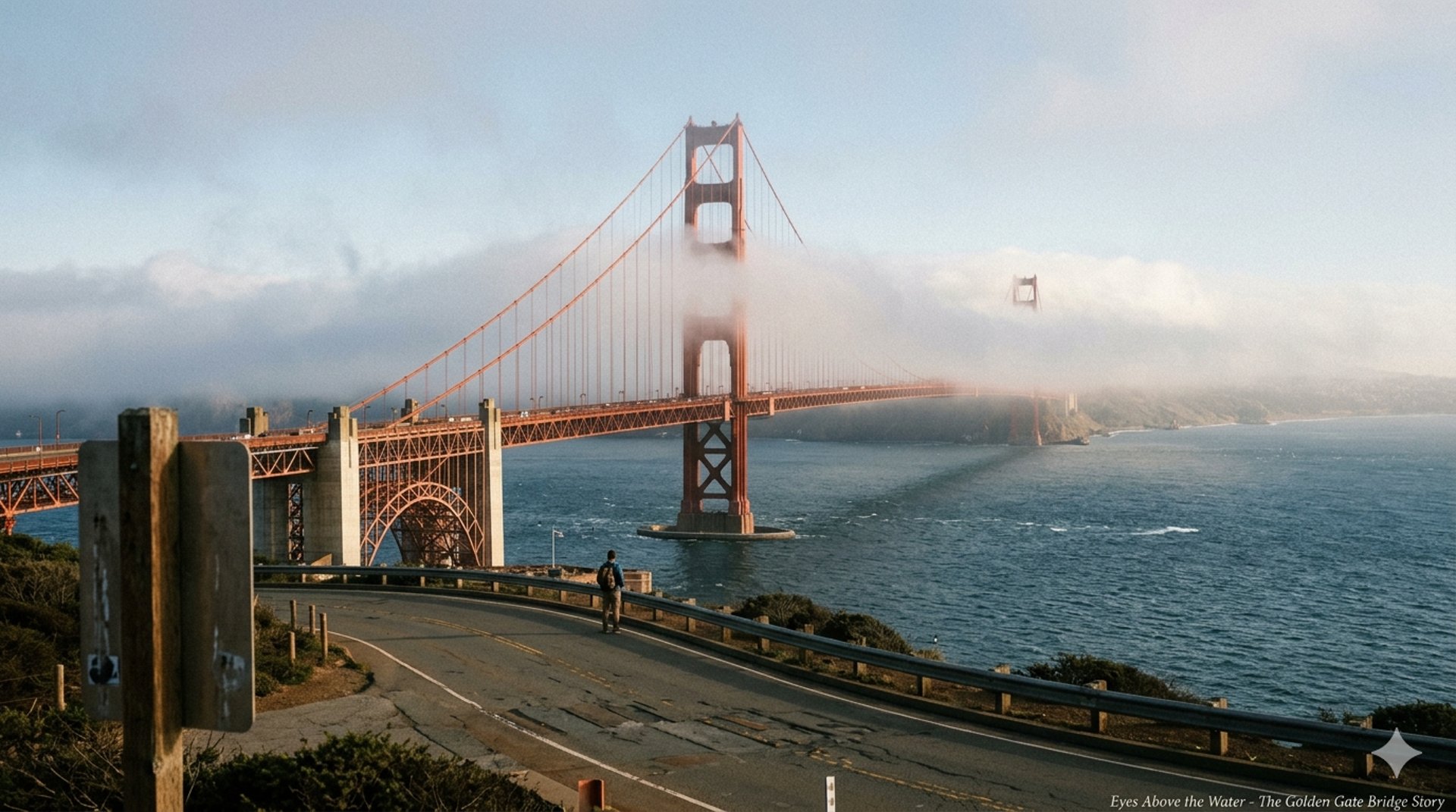
The Golden Gate Bridge is a masterclass in human contradiction. Painted in its iconic "International Orange," its Art Deco towers slice through the San Francisco fog, serving as a muse for generations of filmmakers, painters, and photographers. It is widely cited as the most photographed bridge on earth.
Yet, the exact design elements that captivate the artistic eye—its staggering height, romantic vistas, and soaring lines—have simultaneously acted as a global lightning rod for human tragedy. It is a monument where engineering genius meets profound despair, where a structure built to connect people became a stage for those looking to disconnect entirely.
1. The Fortress of Process: Building the Impossible
To understand the bridge, you have to look at the sheer grit of its construction. Built during the depths of the Great Depression, the project was a logistical nightmare. Chief Engineer Joseph Strauss ran the site from 1933 to 1937 with military discipline.
The industry standard for high-stakes ironwork in the 1930s was brutal: one worker death for every million dollars spent. By that metric, 35 men should have died building the $35 million Golden Gate Bridge.
Strauss refused to accept that math. He mandated a revolutionary $130,000 safety net beneath the spans. It was a massive success, saving 19 workers who playfully dubbed themselves the "Half Way to Hell Club." While a tragic scaffold collapse just months before completion ultimately claimed 11 lives, Strauss proved to the industrial world that a fierce safety culture could push an impossible project across the finish line ahead of schedule and under budget.
2. Framing the Fall: The Artist's Siren Song
When consulting architect Irving Morrow looked at the steel arriving from Pennsylvania, it was coated in a warm orange primer. The U.S. Navy aggressively lobbied to paint the bridge in black and yellow stripes for visibility in the heavy bay fog. Morrow fought back, choosing to keep the orange, knowing it would contrast beautifully with the deep blue of the Pacific and complement the golden California hills.
Morrow also added vertical fluting to the towers, designed to manipulate light and shadow. Artists and photographers flocked to it, falling in love with how the rigid, geometric steel sliced through the chaotic, rolling fog. But this aesthetic perfection created a dangerous illusion. The bridge didn't look like a utility pipeline; it looked romantic and cinematic. For nearly nine decades, it became a destination.
3. The Four-Second Freefall
Since opening in 1937, approximately 2,000 people have jumped from the bridge. The physics of the fall shatter any romantic notions of a peaceful exit:
The Drop: It takes a mere four seconds to hit the water from 220 feet up.
The Impact: Jumpers hit the water at roughly 75 mph (120 km/h)—a collision equivalent to hitting a concrete wall.
The Fatality Rate: Approximately 98% of those who jump die from internal trauma or drowning.
Of the survivors, the psychological uniformity is chilling. Almost every person who survived reported that the millisecond their hands left the railing, they experienced “instant regret.” The illusion vanished mid-air; they realized they wanted to live, but were already in freefall. Similar, harrowing instances occur within the MAiD framework: individuals have awakened during the procedure and screamed for help, only to be met with the administration of even stronger, lethal doses of medication to ensure the process reaches its "intended" conclusion. These moments of profound distress are rarely reflected in official medical charts or media reports.
4. The 90-Year Delay
While Joseph Strauss seamlessly installed a safety net to protect his workers in 1936, protecting the public became a multi-decade battle. For years, advocates were met with resistance. Critics argued that a net would "ruin the iconic view," cost too much, or that people would "just find somewhere else to go"—a myth debunked by psychiatric data proving that suicidal urges are often highly site-specific.
The postcard view was prioritized over human life for nearly a century. That script finally flipped in January 2024, when the city completed a permanent, marine-grade stainless steel deterrent net. Positioned 20 feet below the sidewalk, it doesn't ruin the view, but it makes jumping painful, survivable, and ultimately futile.
The True Legacy
The Golden Gate Bridge remains a masterpiece of engineering. But its true evolution is now complete. A monument's worth isn't measured solely by how it manipulates light or how many tourists it attracts; its true legacy is that it finally protects the vulnerable the same way it protected the ironworkers who built it nearly a century ago.
We must apply this same wisdom to our medical frameworks. MAiD, in its current trajectory, risks veering away from its promise to serve only those with irreversible, terminal illnesses. One day, if we are not careful, it will be remembered not as an act of compassion, but as a disastrous medical system that valued cold ledgers over human beings.
Remember folks:
You are irreversible: "For you created my inmost being; you knit me together in my mother’s womb." (Psalm 139:13)
You are unrepeatable: "I praise you because I am fearfully and wonderfully made; your works are wonderful, I know that full well." (Psalm 139:14)
You are highly valued: "Are not five sparrows sold for two pennies? Yet not one of them is forgotten by God." (Luke 12:6)
You are not a burden: "Cast all your anxiety on him because he cares for you." (1 Peter 5:7)
Warmly your friend,
Bill Vassilopoullos